What Is a Smart Toilet? Features, Benefits & Buying Guide | EMU
One toilet paper roll uses 128 liters of water to produce. A bidet uses under 1 liter per wash. The real environmental and health comparison - with the data.
Toilet paper has been the default for decades. But the data tells a different story - one where bidets win on hygiene, environmental impact, and long-term cost. This is not a marketing argument. These are the numbers.
← Back to the Complete Guide to Bidet Toilet Seats
Toilet paper is one of the most resource-intensive everyday products in existence. The global figures are striking:
Most people never think about this. It's a product so embedded in daily routine that its environmental cost is invisible. The bidet changes that equation entirely.
The most common objection to bidets is water use. "Doesn't a bidet waste water?" The answer, when you look at the full picture, is no - it saves a significant amount.
| Toilet Paper | Bidet Seat | |
|---|---|---|
| Water to produce 1 roll | ~128 liters | - |
| Water used per wash | - | ~0.4-0.8 liters |
| Annual water use (avg. household) | ~51,200 liters (production) | ~584 liters (use) |
| Trees consumed | Yes | None |
| Chemical processing | Yes | None |
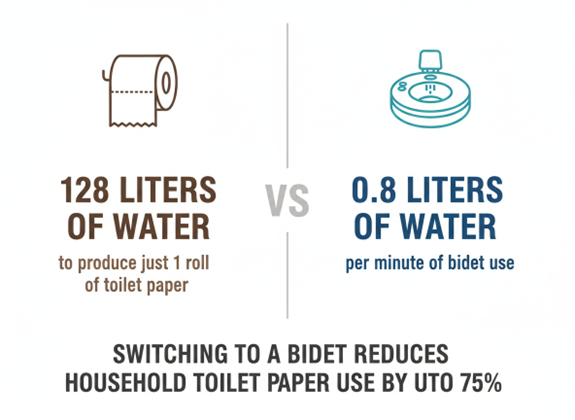
A bidet seat uses 0.8 liters of water per minute during active use. The average wash lasts 30-60 seconds - meaning under 1 liter per use. Compare that to the 128 liters embedded in every single roll of toilet paper, and the environmental case is clear.
Switching to a bidet seat reduces a household's toilet paper consumption by up to 75%, with a direct reduction in water use, paper waste, and chemical processing.
Beyond the environment, there is a straightforward hygiene argument: water cleans more thoroughly than paper.
Repeated wiping with dry paper causes friction. For people with sensitive skin, hemorrhoids, anal fissures, or post-surgical recovery needs, this friction causes real discomfort and can worsen symptoms. Warm water cleaning eliminates friction entirely.
Water reaches and cleans more effectively than paper, which smears rather than removes. This is why bidets are standard in medical and elder care facilities across Japan and much of Europe - not as a luxury, but as a hygiene requirement.
Inadequate cleaning is a contributing factor in urinary tract infections (UTIs), particularly in women. Bidet use - especially front wash functions - reduces contamination risk significantly.
Dermatologists consistently note that water-based cleaning is gentler on perianal skin than repeated paper contact. For daily use over years, this difference accumulates.
Toilet paper feels cheap because it's purchased in small amounts. The annual cost tells a different story.
| Toilet Paper | Electric Bidet Seat | |
|---|---|---|
| Average annual spend | €100-€200 per household | €0.05/day running cost (~€18/year) |
| Upfront cost | None | €90-€200 (one-time) |
| Lifespan | Single use | 5-10 years |
| Break-even point | - | 6-18 months |
After the break-even point, a bidet seat saves money every year. Over a 10-year lifespan, the savings are substantial - and that's before accounting for reduced plumbing issues from less toilet paper use.
| Factor | Toilet Paper | Bidet Seat |
|---|---|---|
| Trees consumed | Yes - 27,000/day globally | None |
| Water (production) | ~128L per roll | None |
| Water (use) | Minimal | ~0.4-0.8L per wash |
| Chemical processing | Bleaching, pulping | None |
| Plastic packaging waste | Yes | Minimal (one-time purchase) |
| Carbon footprint | Manufacturing + transport | Minimal after production |
The bidet seat is not a perfect zero-impact product - manufacturing has a footprint. But over its lifespan, it eliminates the ongoing resource consumption of toilet paper almost entirely.
No. Most bidet seat users reduce toilet paper use dramatically - but few eliminate it entirely. The warm air dryer on electric bidet seats handles drying for most users, with a small amount of paper used occasionally for preference.
Even a 50% reduction in toilet paper use delivers meaningful environmental and financial benefits. A 75-90% reduction, which is typical for regular bidet users, is transformative.
EMU exports to Europe, Japan, Vietnam, and Russia - markets where environmental awareness and hygiene standards are high. The bidet vs. toilet paper argument resonates strongly with:
The data supports the product. The market is ready.
Ready to make the switch or explore a trade partnership? Contact EMU for product and B2B enquiries →
Continue exploring the content hub: - ← The Complete Guide to Bidet Toilet Seats - ← Warm Water Bidet Seats: Why They're Worth It - ← How to Install a Bidet Seat: Step-by-Step Guide - What Is a Smart Toilet? →
Get the latest insights on smart bathroom technology delivered to your inbox
Smart toilets combine integrated bidet wash, auto-flush, heated seats, and self-cleaning technology. Complete guide to features, benefits, and what to look for.
Read more
Warm water is the #1 requested bidet feature. Find out how warm water bidet seats work, what to look for, and why electric bidet seats are worth the upgrade.
Read more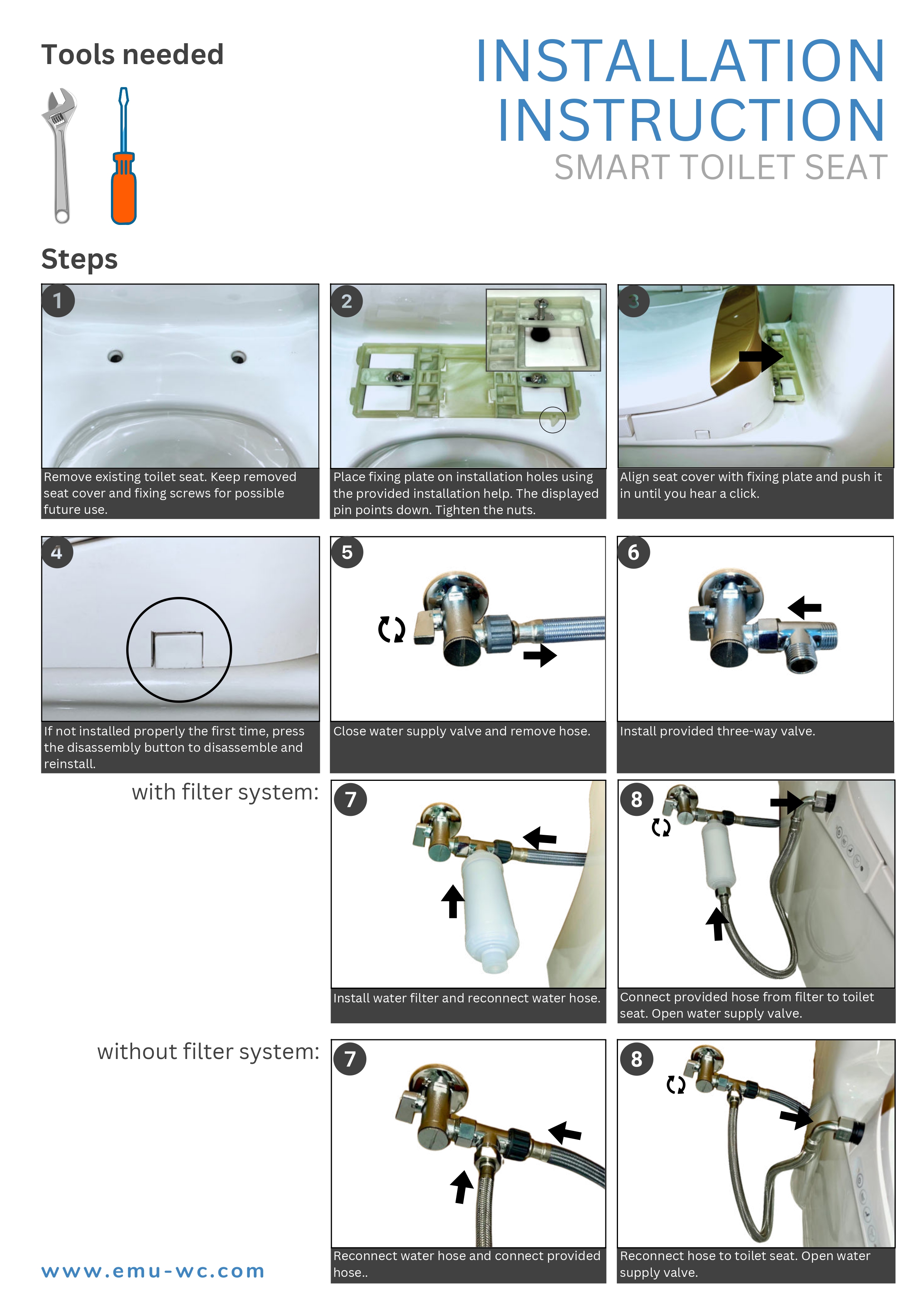
Install a bidet seat in under an hour - no specialist plumbing needed. Complete step-by-step guide for homeowners and contractors, plus troubleshooting tips.
Read moreDiscover our range of bidet toilets and intelligent bathroom solutions